
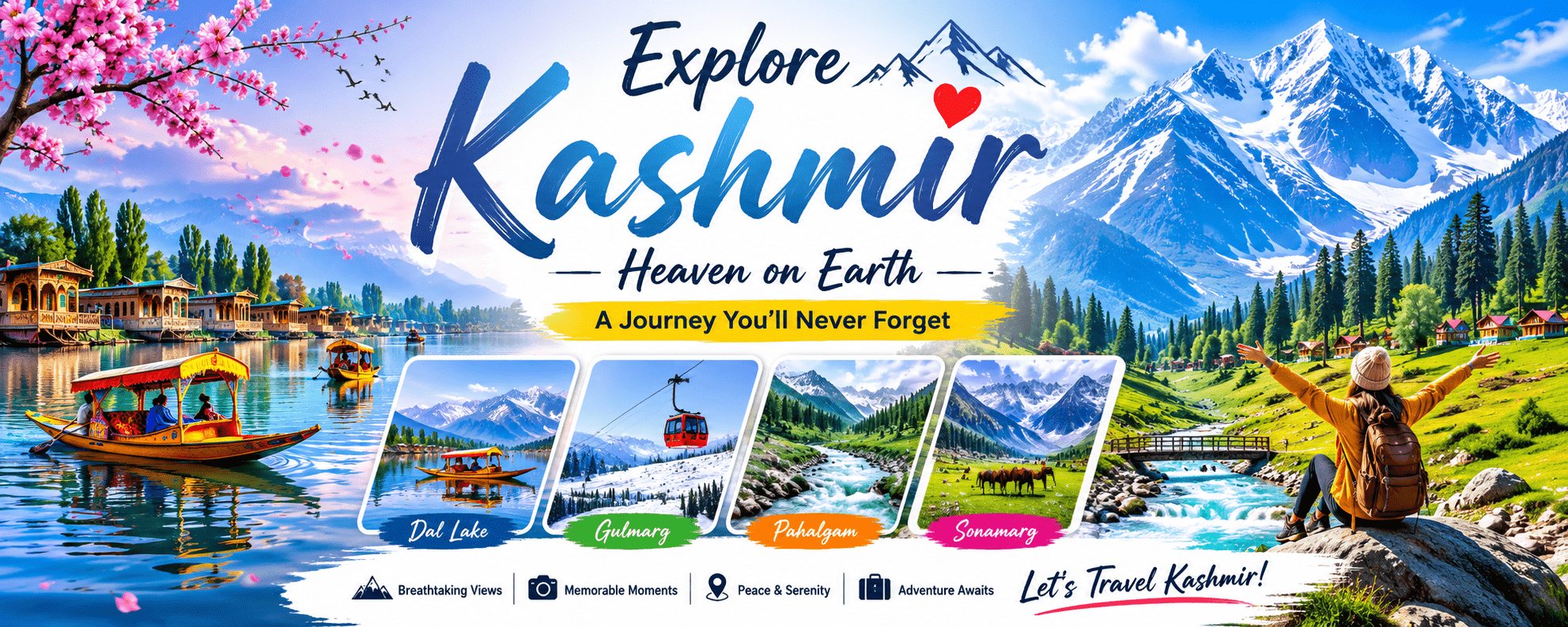
Kashmir — The Crown of India
Often called Dharti ka Swarg (Heaven on Earth), Kashmir is one of the most breathtaking regions in the world. Here’s a comprehensive overview:
🏔️ History
Ancient Period Kashmir’s recorded history dates back over 5,000 years. It finds mention in the Mahabharata and was a major centre of Hindu and Buddhist learning. The ancient text Rajatarangini (12th century), written by Kalhana, is the oldest chronicle of Kashmiri history.
Medieval Period Islam arrived in Kashmir in the 14th century, primarily through the influence of Shah Mir, who founded the first Muslim sultanate in 1339. The region flourished culturally under Zain-ul-Abidin (1420–1470), known as Budshah, who promoted religious tolerance and the arts. The Mughals under Akbar annexed Kashmir in 1586, and it became a prized summer retreat — Jehangir famously called it paradise.
Sikh & Dogra Rule After Mughal decline, the Sikhs under Ranjit Singh took control in 1819. Following the First Anglo-Sikh War, the British sold Kashmir to Gulab Singh (a Dogra Rajput) via the Treaty of Amritsar (1846), establishing the princely state of Jammu & Kashmir.
Post-Independence (1947 onwards) At partition, Maharaja Hari Singh signed the Instrument of Accession to India amid a Pakistani tribal invasion. This triggered the first Indo-Pak war. The region has since been a subject of ongoing dispute, with India administering the Kashmir Valley and Jammu, Pakistan controlling Azad Kashmir and Gilgit-Baltistan, and China occupying Aksai Chin. In August 2019, India revoked Article 370, bifurcating the state into two Union Territories — Jammu & Kashmir and Ladakh.
—## 🌦️ Climate Conditions
Kashmir has a temperate continental climate that varies dramatically by season and altitude.
| Season | Months | Temperature | Conditions |
|---|---|---|---|
| Spring | March–May | 10°C – 20°C | Blooming flowers, ideal travel time |
| Summer | June–August | 20°C – 35°C | Pleasant, lush green valleys |
| Autumn | Sep–November | 5°C – 20°C | Golden chinar trees, best photography |
| Winter | Dec–February | −10°C – 5°C | Heavy snowfall, skiing season |
Key highlights:
- The valley receives snowfall from December to February; Gulmarg gets some of the deepest snow in Asia, making it a premier ski destination.
- Summers are mild and perfect for sightseeing — a big relief from the Indian plains heat.
- Autumn (October) is considered the most beautiful time, when chinar trees turn fiery red and gold.
- High-altitude areas like Sonamarg can experience snow even in June.
- Rainfall is moderate, mostly through western disturbances in winter and light monsoon spills in July–August.
—## ✈️ How to Reach Kashmir
By Air
Sheikh ul-Alam International Airport, Srinagar is the main gateway. Direct flights operate from Delhi, Mumbai, Bengaluru, Hyderabad, Kolkata, and several other major Indian cities. Flight time from Delhi is about 1.5 hours. Airlines include IndiGo, Air India, SpiceJet, and Vistara.
By Road
- From Delhi: ~850 km via NH 44 (Jammu–Srinagar Highway). The route goes through Jammu → Banihal Tunnel (Qazigund) → Srinagar.
- Jammu–Srinagar National Highway is the primary road link but can be blocked during heavy snowfall (Dec–Feb). Check road status before travel.
- The scenic Mughal Road (via Shopian) is a seasonal alternative.
- Bus services (JKSRTC and private operators) run from Delhi, Jammu, Chandigarh, and Amritsar.
By Train
There is no direct railway to Srinagar yet (the Udhampur–Srinagar–Baramulla Rail Link is under construction and partially operational). The nearest functional major railhead is Jammu Tawi, well-connected to Delhi, Mumbai, and other cities. From Jammu, you take road transport (~6–8 hrs) to Srinagar. The Banihal–Baramulla section within the valley does operate a local rail line.
Best time to visit: May–June for lush greenery, October for autumn colours, and December–January for snow lovers and skiing at Gulmarg.
Popular Places in Kashmir
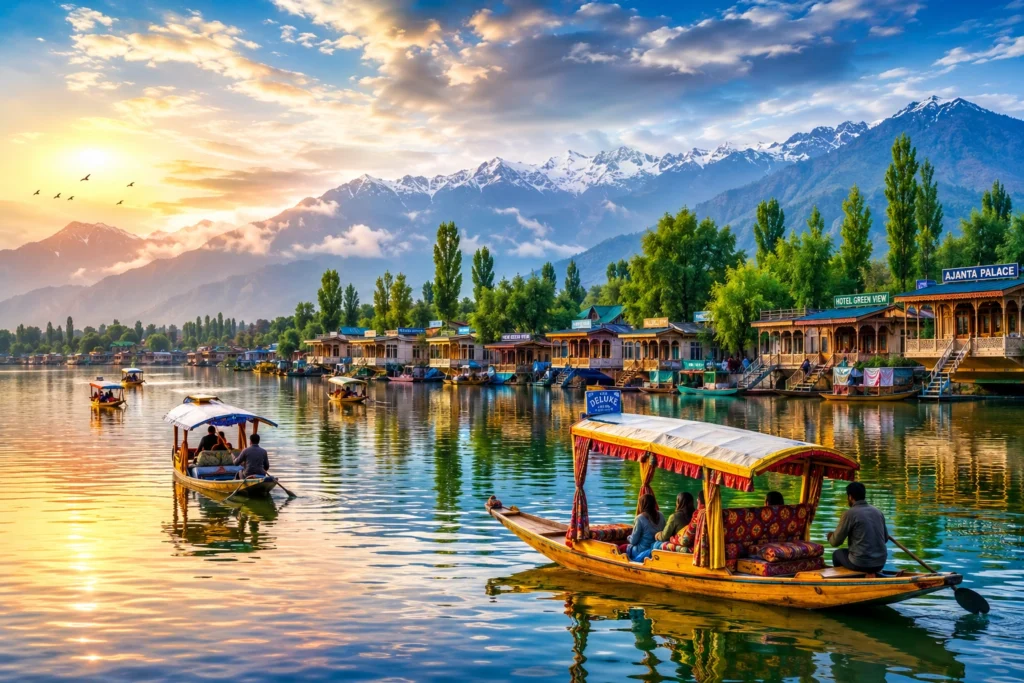
Dal Lake — Srinagar
The soul of Kashmir. Dal Lake is famous for its iconic houseboats, shikara rides, and the floating vegetable markets. Staying on a houseboat here is a once-in-a-lifetime experience. The lake is surrounded by the Zabarwan mountain range and reflects the snowy peaks on still mornings.
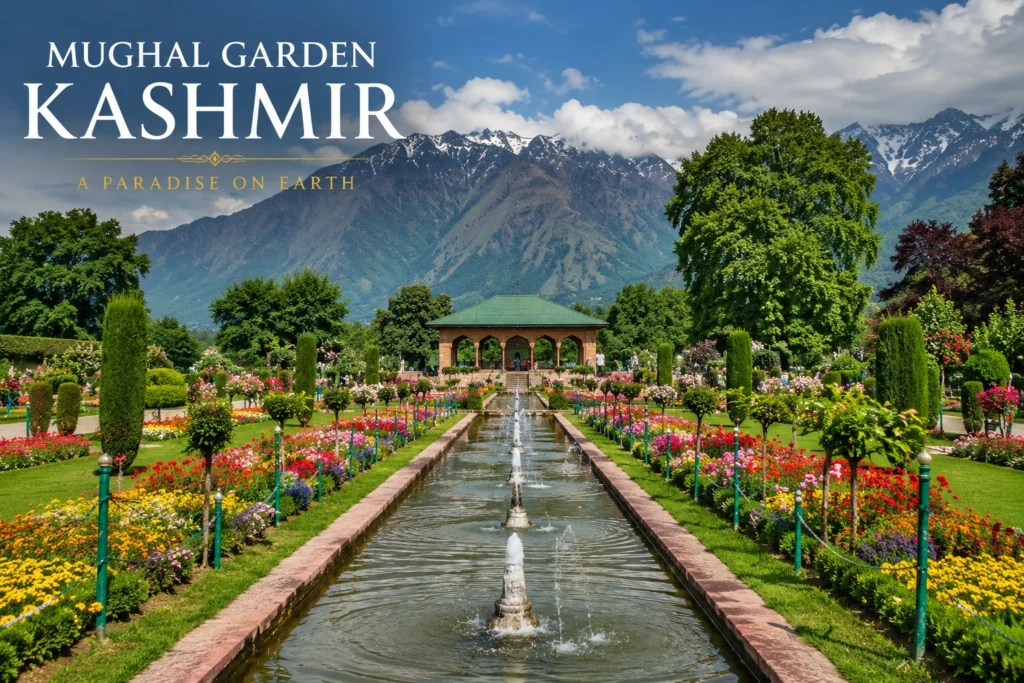
Mughal Gardens — Srinagar
Three stunning Mughal-era terraced gardens line the banks of Dal Lake:
Shalimar BaghAbode of LoveBuilt by Jehangir for Noor Jahan, with cascading fountains
Nishat BaghGarden of Bliss12 terraces, panoramic views of the lake & Zabarwan hills
Chashme ShahiRoyal SpringSmallest but most pristine; natural spring water
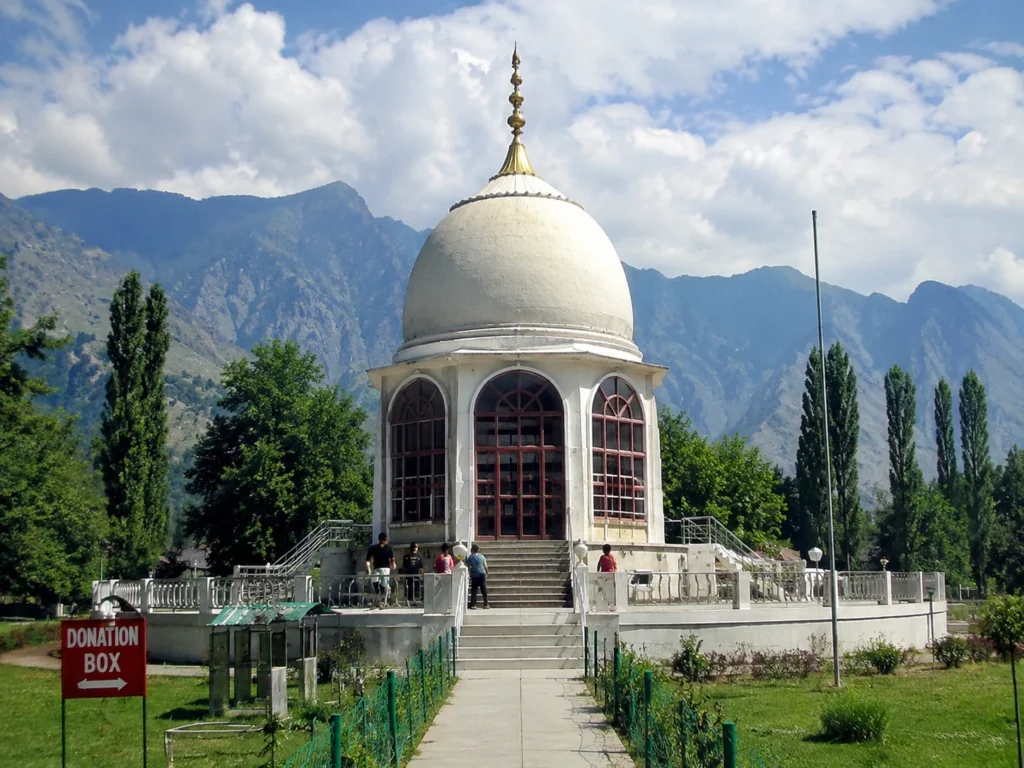
Shankaracharya Temple
Perched atop Shankaracharya Hill at 1,000 ft above Srinagar, this ancient temple dedicated to Lord Shiva offers a panoramic 360° view of the entire valley. It dates back to 220 BCE and is one of the oldest temples in Kashmir.

Gulmarg — Meadow of Flowers
At 2,650 m altitude, Gulmarg is one of Asia’s premier ski resorts and one of the world’s highest gondola rides (the Gulmarg Gondola). In summer it turns into a lush meadow of wildflowers; in winter it’s blanketed in deep powder snow.

Pahalgam — Valley of Shepherds
A stunning valley along the Lidder River, Pahalgam is the base camp for the annual Amarnath Yatra pilgrimage. It offers lush pine forests, trout fishing, pony rides, and scenic meadows like Baisaran (called “Mini Switzerland”).
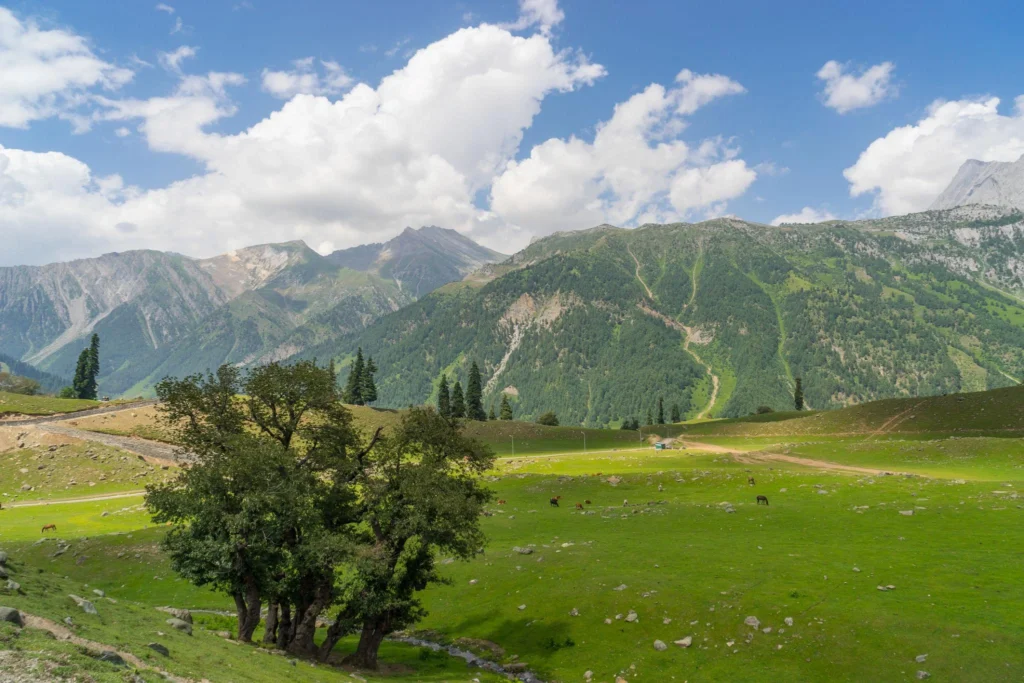
Sonamarg — Meadow of Gold
One of the most iconic experiences in Manali. Situated at 3,978 metres, Rohtang Pass offers breathtaking snow-covered landscapes and stunning panoramic views of the Himalayas. You can enjoy skiing, snowboarding, and snow scooter rides here. It is open generally from May to November, and a permit is required for entry.
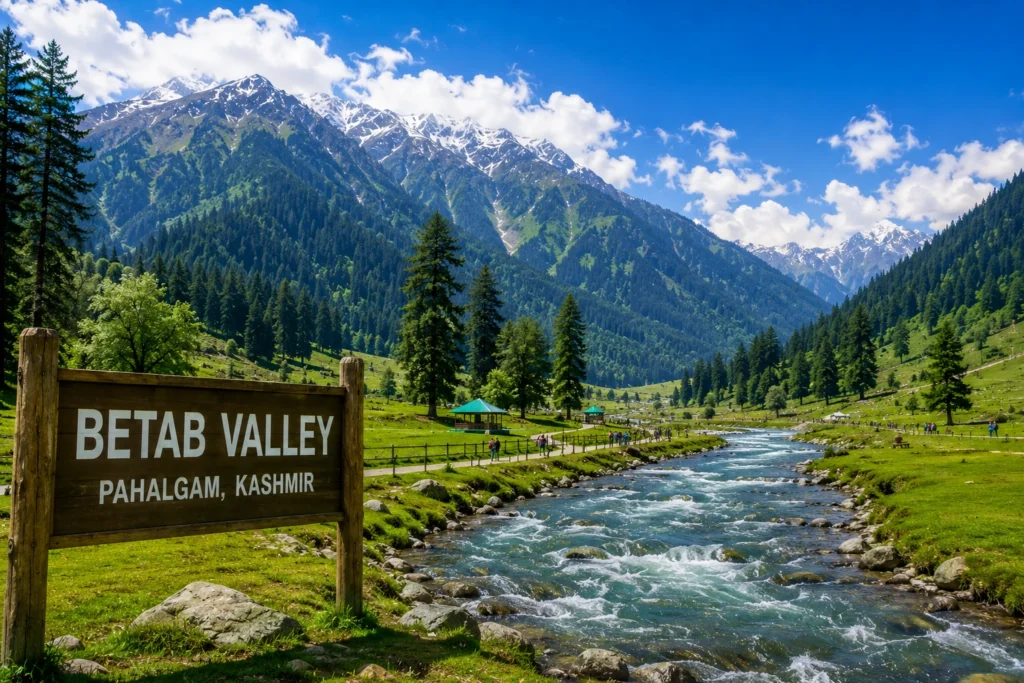
Betaab Valley — Pahalgam
Named after the 1983 Bollywood film Betaab shot here, this valley is a feast for the eyes — lush green meadows, dense pine forests, and the crystal-clear Lidder River running through it. Very popular for picnics and photography.
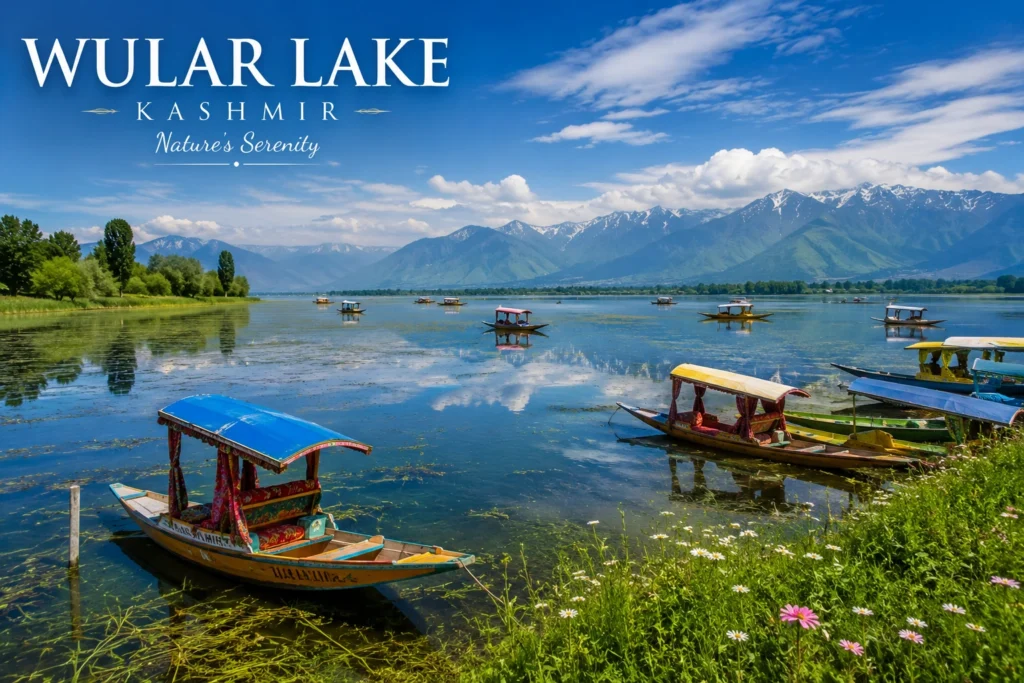
Wular Lake — Bandipora
One of the largest freshwater lakes in Asia, Wular Lake is a paradise for birdwatchers. It serves as a habitat for migratory birds from Central Asia and is surrounded by the Haramukh mountain range.
🗺️ Quick Reference
| Place | Distance from Srinagar | Specialty |
|---|---|---|
| Gulmarg | ~56 km | Skiing, Gondola |
| Pahalgam | ~96 km | Trekking, Pilgrimage |
| Sonamarg | ~80 km | Glacier, Camping |
| Yousmarg | ~47 km | Offbeat, Meadows |
| Betaab Valley | ~100 km | Scenic beauty |
| Wular Lake | ~60 km | Bird watching |